FSI in Bangalore 2026: Rules, Calculation, Premium FAR & TDR Explained

Real Estate Basics
- January 27, 2026
- 10 min read
Introduction
Even if you have a passing interest in real estate and like keeping up with industry terms, you’ve likely realised it’s like opening Pandora’s box; there’s always another essential concept waiting to be understood.
It’s like a never-ending saga. So the word in question today is drum roll, please: FSI in Bangalore 2026.
While it may sound technical, FSI is one of the most powerful factors shaping how our city grows. It influences building heights, population density, infrastructure load, property values, and even the quality of life in neighbourhoods.
As Bangalore expands rapidly, understanding FSI is essential for developers, investors, and homebuyers alike. This guide simplifies the concept of FSI in Bangalore, explaining what it means, how it is calculated, what determines it, and why it matters.
What is FSI in Bangalore?
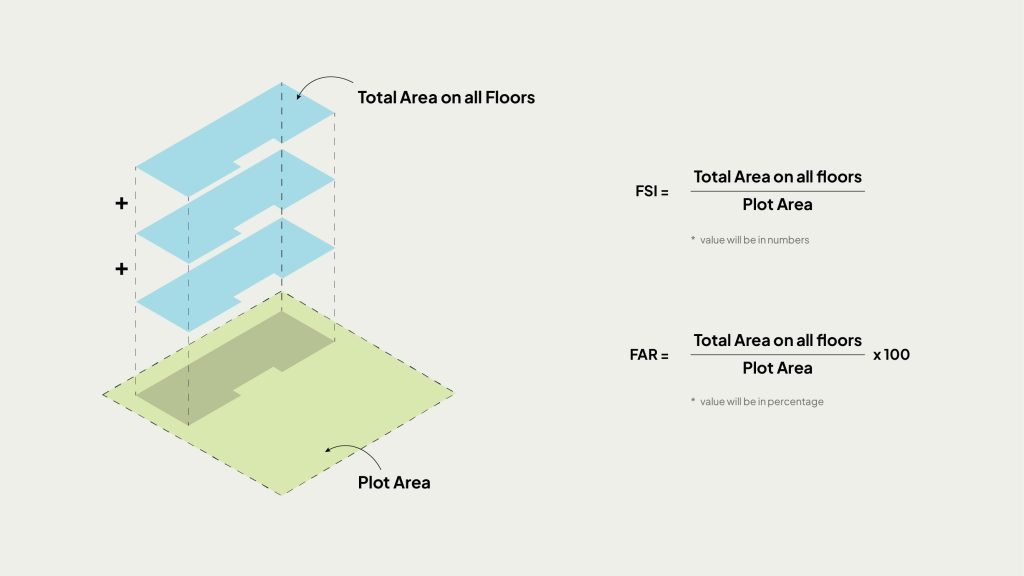
Floor Space Index (FSI) is the ratio of a building’s total constructed area to the total area of the plot. It determines the maximum permissible construction allowed on a piece of land. For example, an FSI of 2.0 allows construction equal to twice the plot area.
Formula:
FSI = Total Built-Up Area ÷ Total Plot Area
For example, if a 500 sq m plot has an FSI of 2.0, you can construct 1,000 sq m of total built-up area across all floors combined.
FSI vs FAR: Is There a Difference?
FSI (Floor Space Index) and FAR (Floor Area Ratio) are the same planning metric.
- FSI is commonly used in cities like Mumbai and Bangalore.
- FAR is more commonly used in Delhi and internationally.
Both represent:
FSI (or FAR) = Total Built-Up Area ÷ Plot Area
An FSI of 2.0 means you can build twice the plot size, whether horizontally or vertically.
How is FSI Calculated in Bangalore?
Formula
FSI = Total Built-Up Area ÷ Total Plot Area
Example Calculation
Total Plot Area: 500 sq.m
Total Built-Up Area (all floors combined): 800 sq.m
FSI = 800 ÷ 500 = 1.6
This means the constructed area is 1.6 times the total plot size.
Important Note on Setbacks
Setbacks affect the buildable footprint and ground coverage of a project but do not change the base plot area used to calculate FSI.
In Bangalore, FSI is calculated on the gross plot area, not after deducting setbacks.
*Key Setback Regulations in Bangalore
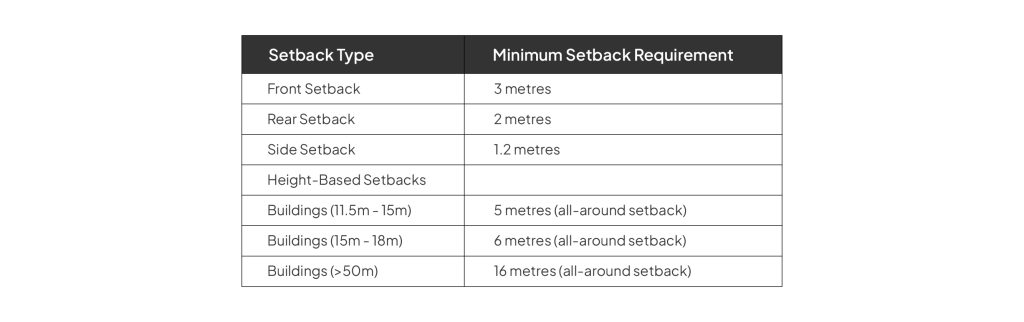
Why Are Setbacks Important?
- Natural Light and Ventilation: Setbacks ensure that buildings receive adequate sunlight and air circulation, preventing shadows from obstructing neighbouring properties.
- Safety and Accessibility: They provide space for emergency services to access buildings and create a buffer against noise from nearby roads or industries.
- Environmental Protection: Setbacks help protect natural resources by maintaining distance from water bodies and green spaces.
What Determines FSI in Bangalore?
FSI in Bangalore is regulated by planning authorities such as:
- Bruhat Bengaluru Mahanagara Palike (BBMP)
- Bangalore Development Authority (BDA)
- Master Plan (RMP 2031)
FSI limits depend on:
1. Road Width
Wider roads generally allow higher FSI.
2. Zoning Classification
Residential, commercial, industrial, and mixed-use zones have different FSI limits.
3. Infrastructure Capacity
Water supply, sewage systems, and traffic capacity influence FSI approvals.
4. Plot Location
Central zones may allow higher FSI compared to peripheral areas.
5. Building Type
Commercial developments often have higher permissible FSI than residential buildings.
What is the maximum FSI in Bangalore?
The maximum FSI in Bangalore varies based on zoning classification, road width, and infrastructure capacity. Residential FSI typically ranges between 1.5 and 2.75, while commercial FSI may go up to 4.0 in selected zones.
Primary and Secondary Factors Influencing FSI
Primary Factors
- Plot location
- Land use category
- Road width
- Building height norms
- Infrastructure availability
Secondary Factors
- Market demand
- Area development potential
- Zoning amendments
- Transit connectivity
FSI plays an important role in determining the development potential and market value of a property in Bangalore. That is why developers and investors need to look closely at FSI regulations and the factors that influence them before investing in any property. This helps them make informed decisions, maximise returns, and contribute to the city’s overall growth and development.
Differences Between Residential and Commercial FSI
Typically:
- Residential buildings have a moderate FSI to maintain liveability.
- Commercial buildings often receive higher FSI due to higher economic output and infrastructure planning.
What is the Importance of the Floor Space Index (FSI)?
- Urban Density Management: FSI determines how densely a plot can be developed, balancing between vibrant urban hubs and avoiding congestion.
- Homebuyer Insight: Understanding FSI helps home buyers gauge the maximum buildable area, ensuring they choose properties that meet their needs without being cramped.
- Sustainable Development Incentives: Cities often reward green-certified buildings with additional FSI, promoting eco-friendly construction and improving overall environmental quality.
- Community Amenities: Higher FSI can lead to more housing and facilities, addressing community needs and preventing underutilisation of land.
- Regulatory Control: FSI enables local authorities to manage population density effectively, preventing overcrowding and illegal constructions.
- Enhanced Urban Planning: By regulating construction, FSI contributes to well-planned, functional, and enjoyable urban spaces for residents and visitors alike.
- Quality of Life Improvement: Ultimately, FSI plays a crucial role in shaping livable, sustainable communities that enhance residents’ quality of life.
Factors Affecting Floor Space Index
FSI limits are adjusted according to the planning needs and projected growth of a city or town. Local authorities set the maximum FSI for each plot, considering factors such as:
- Road width
- Plot location
- Proposed type of development
Additionally, the land’s carrying capacity and infrastructure capabilities, such as water supply, sewage systems, and solid waste management, are taken into account.
Differences in FSI for Residential and Commercial Buildings
FSI also varies based on the type of building. Typically, residential buildings have a lower FSI compared to commercial properties.
What is Premium FSI in Bangalore?
Premium FSI allows developers to exceed the base permissible FSI by paying additional charges to the planning authority.
It enables:
- Additional floors
- Larger built-up area
- Higher development intensity
Premium FSI charges are usually calculated based on:
- Guidance value of the land
- Location
- Zoning
- Road width
Simplified Example
If a 1,000 sq m plot has a base FSI of 2.5:
Base permissible area = 1,000 × 2.5 = 2,500 sq.m
If premium FSI allows an additional 1.0 FSI:
Additional buildable area = 1,000 sq m
Developers pay a premium charge calculated on the guidance value to obtain this additional development right.
Premium FSI significantly enhances project viability in high-demand areas.
What is TDR (Transferable Development Rights)?
TDR allows landowners to transfer unused development rights from one plot to another.
In Bangalore, TDR is often used in:
- Road widening projects
- Infrastructure expansion
- Lake buffer acquisition
Developers can purchase TDR to increase FSI on eligible plots, subject to regulatory approval.
TDR supports balanced development by protecting sensitive areas while encouraging growth in suitable zones.
Karnataka Relaxes KIADB FAR Norms: What 5.2 FAR Means
The state of Karnataka is on the verge of a major industrial and realty boom with the revised guidelines in the Karnataka Industrial Areas Development Board (KIADB) regulations, which allow for a higher Floor Area Ratio (FAR), enabling the construction of up to 5.2 times the size of the land through the premium FAR scheme.
This will give rise to the vertical development of industrial, commercial, and residential spaces, especially along major industrial hubs and the outskirts of Bangalore, which have faced issues with horizontal development because of the scarcity of land.
Revised FAR Structure (Road Width Based)
- Roads > 30 metres: FAR up to 5.2
- 24–30 metres: FAR up to 4.8
- 18–24 metres: FAR up to 4.0
- 12–18 metres: FAR up to 3.6
- Below 12 metres: FAR 2.45 – 2.8
This structured approach aligns development intensity with infrastructure capacity.
Impact on Industrial & Real Estate Growth
The reforms encourage:
- Vertical factory models
- Multi-level warehousing
- Integrated industrial townships
- Worker housing within industrial zones
- Mixed-use industrial ecosystems
Peripheral growth zones and emerging industrial corridors stand to benefit significantly.
The changes also:
- Improve land efficiency
- Stimulate commercial demand
- Encourage residential growth near industrial hubs
- Attract global manufacturing investments
This signals a long-term shift towards vertical industrial development in Karnataka.
Benefits of Understanding Floor Space Index (FSI)
FSI is a key element in urban planning and real estate development, shaping the growth and design of cities. It controls building density, promotes balanced development, and ensures a better quality of urban life.
Significance of FSI for Builders
- Optimal Land Utilisation: Understanding FSI allows builders to make the most of available land, optimising space for more efficient and profitable developments.
- Design Flexibility: Higher FSI opens up opportunities for innovative architectural designs and multi-storey buildings, enabling builders to offer a range of housing options and amenities.
- Regulatory Compliance: Adhering to FSI regulations ensures that projects align with local building codes, helping avoid legal complications and delays.
- Investment Planning: Knowing the FSI helps builders estimate the total buildable area, enabling them to plan their projects effectively and assess potential investment returns.
Significance of FSI for Homebuyers
- Living Environment: FSI affects the density of residential areas. Lower FSI often results in more open spaces and less congested neighbourhoods, enhancing the living environment.
- Property Value: Properties in areas with a well-balanced FSI tend to maintain or increase in value due to better infrastructure and the availability of amenities.
- Quality of Life: A good understanding of FSI allows homebuyers to choose areas with ample green spaces, parks, and public amenities, enhancing overall quality of life.
- Future Development: Awareness of local FSI helps homebuyers anticipate future development in their neighbourhood, enabling them to make informed decisions regarding property investments.
Examining Real-Life Examples of FSI Implementation
Here are a few real-life examples that give a clearer picture of how FSI functions in various contexts and its relationship with Floor Area Ratio (FAR) in shaping urban development.
- Mumbai, India: Mumbai serves as a prominent example of FSI implementation amid rapid population growth and limited land. To tackle these challenges, the government introduced policies that allow for higher FSI in specific areas, leading to the construction of high-rise buildings that optimise land use. However, this approach has drawn criticism for contributing to overcrowding, straining infrastructure, and reducing open spaces.
- Singapore: In contrast, Singapore employs a comprehensive planning strategy that balances FSI with green spaces and public amenities. The city-state has designated zones for high-density development while preserving ample open areas and ensuring efficient transportation networks. This holistic approach to urban planning has allowed Singapore to maintain a high quality of life despite its population density.
- New York City, USA: New York City exemplifies how FSI can revitalise neighbourhoods and stimulate economic growth. Recent zoning changes have permitted increased FSI in select areas, encouraging developers to invest in underutilised properties. This has transformed neglected neighbourhoods into vibrant commercial and residential hubs. However, concerns about gentrification and the displacement of low-income residents have emerged alongside these developments.
- Tokyo, Japan: Tokyo’s approach to FSI underscores the importance of flexibility in urban planning. The city features a unique zoning system that allows for varying FSI values based on location and context. This adaptability enables Tokyo to meet diverse needs, from high-density commercial areas to low-rise residential neighbourhoods. By customising FSI regulations to fit each area’s characteristics, Tokyo effectively balances development with quality of life.
Conclusion
In summary, the Floor Space Index (FSI) is not merely a regulatory measure; it significantly shapes our living environments, impacts property values, and plays a pivotal role in sustainable urban development. As urban areas continue to expand, understanding FSI becomes increasingly vital for both builders and homebuyers.
It guides construction practices while informing potential property values and the quality of life in residential neighbourhoods. By examining real-life applications of FSI, we can better appreciate its impact on urban development and make informed decisions for future growth, ultimately fostering livable and vibrant communities.
FAQs ( Frequently Asked Questions)
1. What is FSI in simple terms?
FSI is the ratio that determines how much total built-up area can be constructed on a given plot of land.
2. What is an example of FSI (Floor Space Index)?
For example, if you have a plot of land that is 500 sq.m and the permissible FSI is 1.5, you can construct a total built-up area of 750 Sq.m on that plot. This area can be distributed over multiple floors, depending on local building regulations.
3. What is the FSI (Floor Space Index in India)?
In India, Floor Space Index (FSI) is regulated by local municipal authorities and varies from city to city and locality to locality. It is a critical factor in urban planning that determines how much can be built on a piece of land, helping to manage population density and ensure adequate infrastructure.
4. What is the difference between FAR (Floor Area Ratio) and FSI (Floor Space Index)?
FSI (Floor Space Index) and FAR (Floor Area Ratio) are essentially the same planning metric and are often used interchangeably, especially in India. Both indicate the maximum allowable built-up area on a plot relative to the plot’s total land area.
FSI/FAR is calculated by dividing the total permissible built-up area by the plot area and is expressed as a numerical value (usually in decimal form, such as 1.5 or 2.0). This value determines how much construction can be developed on a given piece of land, irrespective of whether it is spread horizontally or vertically.
5. What is TDR in real estate?
TDR (Transferable Development Rights) is a planning tool that allows landowners to transfer unused development rights from one plot to another. Developers can purchase TDR to increase allowable FSI on eligible properties, subject to municipal regulations.
6. Why is FSI important in urban planning?
FSI controls building density and ensures balanced urban development. It helps manage infrastructure load, maintain open spaces, regulate population density, and promote sustainable city growth.
7. What is the maximum FSI in Bangalore?
In Bangalore, the maximum permissible FSI depends on zoning classification, road width, and infrastructure capacity. For residential developments, FSI generally ranges between 1.5 and 2.75, while commercial projects may go up to 4.0 in select zones. In designated industrial areas governed by the Karnataka Industrial Areas Development Board (KIADB), FAR can now reach up to 5.2 on wider roads through premium FAR provisions.
Read our Latest Blogs

Why Choose Modern Spaaces: Bangalore’s Fastest-Growing Real Estate Developer

Company Insight
- October 13, 2026
- 13 min read
Bangalore Metro Impact on Property Prices: What Buyers Should Know
Buying & Investing Insights
- October 5, 2026
- 27 min read

15 Packing and Moving Tips in Bangalore for a Stress-Free House Shift
Lifestyle & Design Inspiration
- September 24, 2026
- 24 min read

Explore Projects

Independent 4 & 5 BHK Villas
starts @ 5 Cr


Sarjapur’s Exclusive 3 BHK Community
starts @ 1.8 Cr

Multi-Gen 2 & 3 BHK Homes
Starts @ 1.87 Cr
Refer & Earn Up to 2%

Invite your friends to explore Modern Spaaces and earn up to 2% of the home value they buy.
Find your Dream Home. Let's talk
Tell us a bit about what you're looking for. One of us will get back to you!