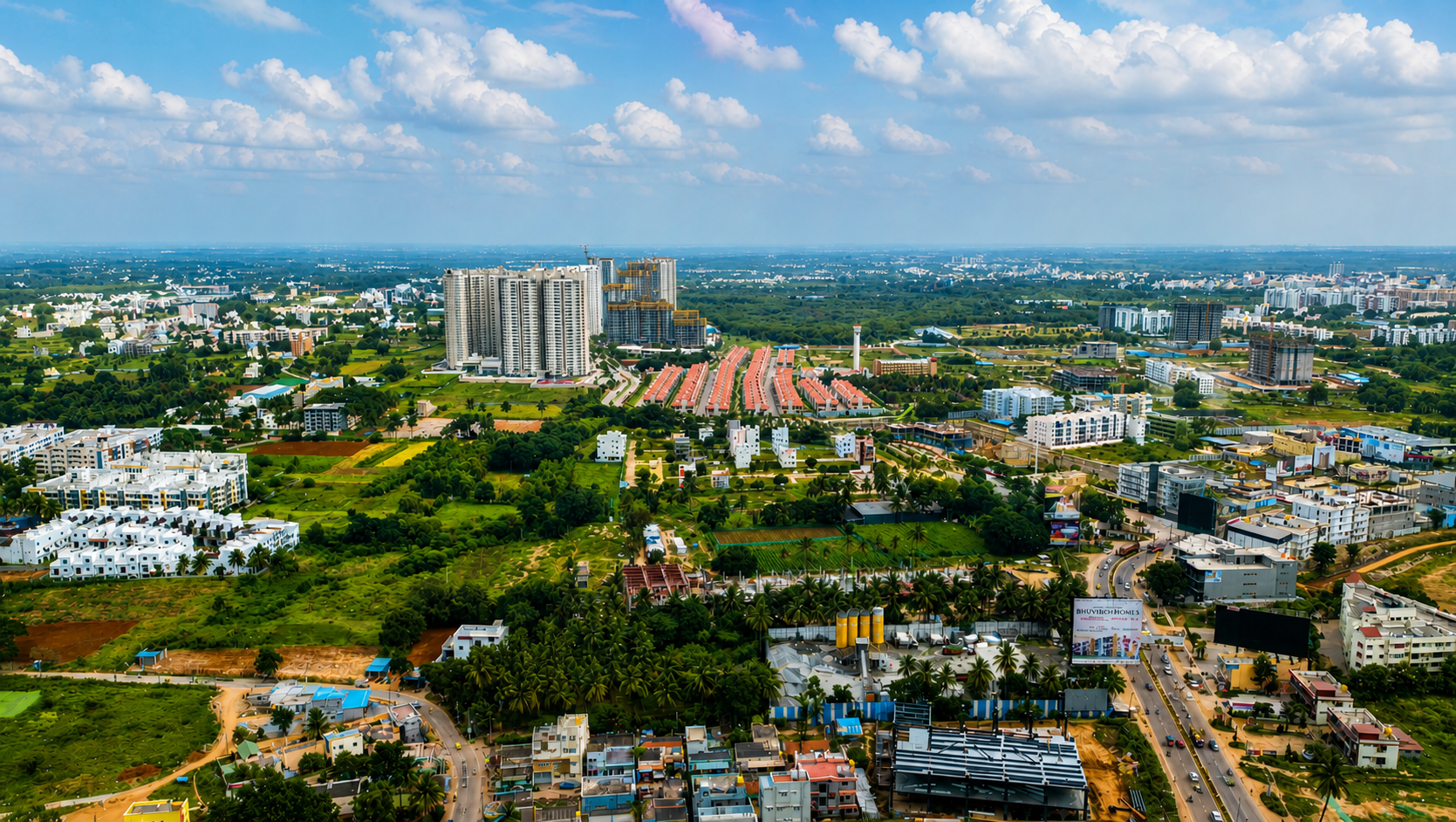
Highest ROI Areas in Bangalore for Real Estate Investment (2026 Guide)

Buying & Investing Insights
- May 5, 2026
- 13 min read
Introduction
If you’ve secretly dreamed of being saved as “landlord” in someone’s phone, this might be your cue to start exploring investment options. Bangalore continues to stand out as one of India’s most promising real estate investment hubs, backed by a thriving IT ecosystem, a growing population of working professionals, and rapid infrastructure expansion that keeps demand consistently ahead of supply.
But location is everything. Two properties in the same city can deliver vastly different returns depending on where they sit, what’s being built nearby, and how rental demand is trending.
This guide breaks down the highest ROI areas in Bangalore, explains how to calculate your returns accurately, and helps you make a more informed investment decision, whether you’re looking at your first flat or your next plot.
What is ROI in Real Estate?
Return on Investment (ROI) measures how profitable a property is relative to what you spent to acquire it. It accounts for both rental income and capital appreciation, giving you a single comparable figure across different properties and markets. In simple terms, ROI helps investors understand whether a property is generating good returns through rental income or appreciation.
ROI Formula:
Return on Investment (ROI) measures how profitable a property is relative to its total cost, combining rental income and capital appreciation into a single comparable figure.
ROI (%) = (Net Profit ÷ Total Investment Cost) × 100
Example calculation
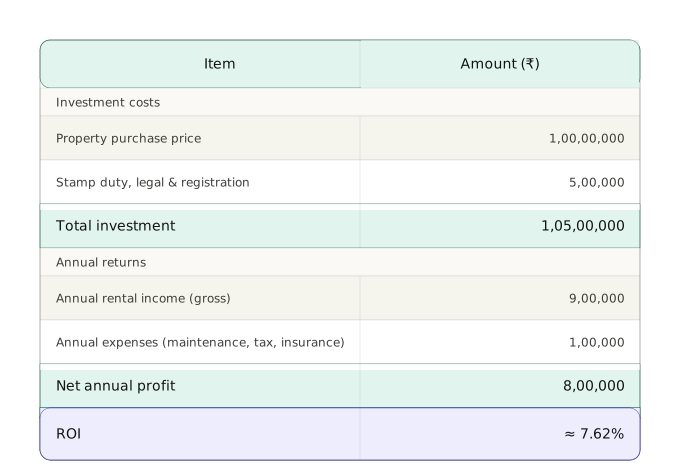
ROI = (8,00,000 / 1,05,00,000) × 100 ≈ 7.62%
This is an example of a healthy annual return, especially in a high-demand city like Bangalore.
Highest ROI Areas in Bangalore
Bangalore continues to be one of India’s most attractive real estate markets.
- Average rental yield: ~4–5%
- Property value appreciation: Select corridors have seen 17.6%+ growth
- Rental values: 20–30% increase since the post-pandemic recovery (2022–2024)
- Strong appreciation: Driven by the IT sector growth
The city’s expanding job market, rising population, and infrastructure development make it a consistent performer for investors.
1. Sarjapur Road & Chikka Tirupathi–Sarjapur Road Corridor
Sarjapur Road is currently one of Bangalore’s fastest-evolving residential corridors and provides the best investment opportunity in the city right now.
Its growth is driven by direct connectivity to the major IT clusters of Whitefield, Electronic City, and Outer Ring Road, meaning high, stable demand from tech professionals. What makes it particularly attractive for investors today is the expansion of growth into neighbouring micro-markets like Chikka Tirupathi and Anekal, where land prices remain lower, but appreciation potential is rising quickly.
Why invest here:
- High rental occupancy driven by proximity to IT employment centres
- Strong forward appreciation linked to the Satellite Town Ring Road (STRR) and the upcoming SWIFT City development
- Lower entry points in emerging sub-pockets compared to more established corridors
Best for: Rental income and medium-to-long-term capital appreciation
2. Whitefield
One of Bangalore’s most established IT hubs, Whitefield commands consistently high rental demand and benefits from ongoing metro connectivity improvements that continue to drive property values upward.
Why invest here:
- Among the highest rental occupancy rates in the city
- Namma Metro Phase 2 (Purple Line extension) has materially improved accessibility and boosted values
- Strong resale market with a large base of established buyers
Best for: Stable rental income, relatively lower risk profile
3. Electronic City
Electronic City offers one of the most accessible entry price points in Bangalore while sitting adjacent to major tech employers, including Infosys, Wipro, and HCL. This combination makes it a strong candidate for rental-focused investors.
Why invest here:
- Affordable purchase prices relative to rental demand
- Large, stable tenant pool of IT professionals
- Ongoing infrastructure improvements, including the Elevated Expressway
Best for: First-time investors seeking rental yield over appreciation
4. Hennur & North Bangalore
North Bangalore, including Hennur, Thanisandra, and Kogilu, is attracting increasing investor interest on the back of improving social infrastructure, new residential project launches, and spillover demand from the congested ORR corridor.
Why invest here:
- Lower property prices
- Growing residential community and improving connectivity
- Proximity to Hebbal, a key commercial and hospitality hub
Best for: Medium-term appreciation
5. Devanahalli & Yelahanka
The area around Kempegowda International Airport continues to attract long-term investors. The proposed Aerospace SEZ, planned ITIR (Information Technology Investment Region), and expanding commercial activity around Devanahalli make this a credible long-horizon bet.
Why invest here:
- Proximity to the international airport drives consistent demand
- Large-scale government-backed infrastructure projects in the pipeline
- Relatively affordable land compared to South and East Bangalore
Best for: Long-term land appreciation
How to Calculate ROI on a Property: Step-by-Step
Step 1: Calculate Total Investment Cost
Add the purchase price to all acquisition-related costs: stamp duty, registration fees, legal fees, brokerage commissions, and any interior or renovation spend before tenancy.
Step 2: Estimate Annual Rental Income
Multiply your expected monthly rent by 12. Research comparable listings in the same locality to ensure your estimate is grounded in current market rates.
Step 3: Deduct Annual Expenses
Account for all recurring costs: maintenance charges, property tax, insurance premiums, and management fees if you’re using an agent. Realistic expense tracking is what separates an accurate ROI from an optimistic one.
Step 4: Calculate Net Annual Profit
Subtract total annual expenses from gross annual rental income. For non-rental properties, net profit is calculated as: sale proceeds minus total acquisition and holding costs.
Step 5: Apply the ROI Formula
ROI (%) = (Net Annual Profit ÷ Total Investment Cost) × 100
A higher percentage indicates a stronger-performing investment. This standardised metric lets you compare properties across different price points, locations, and use cases.
Types of ROI Calculations in Real Estate
Different scenarios call for different methods. Here’s when to use each:
1. Basic ROI: The simplest approach: divide net gain by total cost. Useful for a quick, high-level comparison between two properties before running deeper numbers.
2. Rental Property ROI: Divides net annual rental income by total investment. This is the most commonly used method for income-generating properties and gives you a direct read on cash flow performance.
3. Cash-on-Cash ROI: For leveraged (mortgaged) purchases, this method measures returns only on the capital you personally deployed, that is, your down payment. It’s calculated by dividing annual pre-tax cash flow by the actual cash invested, giving a more accurate picture when home loans are in play.
4. Net ROI (Comprehensive Method): The most thorough approach. It accounts for capital gains, rental income, tax implications, interest costs, and management expenses over the full holding period. Use this for long-term investment modelling or when comparing a leveraged purchase against an outright one.
5 Practical Ways to Improve Your Property ROI
1. Prioritise location within location
Invest in an area that has potential and is upcoming because the entry price will be low, but the appreciation will be high. A property 500 metres closer to a metro station or IT park can command meaningfully higher rent.
2. Set rent based on current market data, not history
Rental markets move. Review comparable listings quarterly and adjust pricing to avoid undercharging in rising markets or sitting vacant in flat ones.
3. Reduce long-term maintenance costs upfront
Opt for durable finishes, energy-efficient fixtures, and low-maintenance landscaping during fit-out. These reduce recurring costs that quietly erode your net yield over time.
4. Invest ahead of infrastructure
Properties along confirmed infrastructure corridors, new metro lines, ring roads, and IT parks tend to appreciate faster than the broader market. The STRR and SWIFT City projects are current examples in Bangalore.
5. Add value through targeted upgrades
Modernised kitchens, reliable backup power, and quality finishes attract better tenants and support higher rents. Even modest, well-chosen improvements can shift your yield meaningfully.
Is Bangalore a Good City to Invest in Property?
Yes, and the fundamentals support it consistently, not just cyclically.
Strong economic base: Bangalore accounts for a disproportionate share of India’s IT exports and startup activity, anchoring long-term employment and housing demand.
Sustained rental demand: The city’s working population continues to grow, driven by domestic migration and returning NRIs. Vacancy rates in well-located properties remain low.
Relative market stability: Bangalore’s real estate market has historically been less speculative and more end-user driven than Mumbai or Delhi NCR, making it less prone to sharp corrections.
Infrastructure trajectory: Metro expansion, ring road development, and new commercial hubs continue to create new pockets of value across the city.
Flat vs Plot: Which Is the Better Investment in Bangalore?
The right answer depends on your investment horizon and objectives.
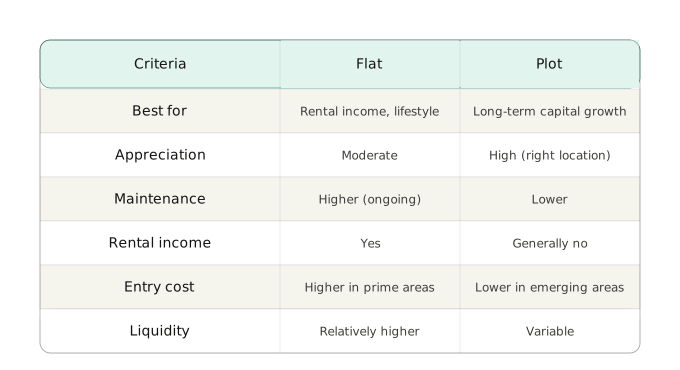
Choose a flat if you want immediate rental income, lifestyle benefits, or access to managed amenities.
Choose a plot if your horizon is 7–10+ years, you’re comfortable with no rental income during the holding period, and you’re investing in a corridor with confirmed infrastructure development ahead of it.
Conclusion
Bangalore remains one of India’s most dependable real estate markets for investors, not because of speculation, but because of sustained, fundamental demand from a large, growing, high-income workforce.
The corridors delivering the strongest returns today, Sarjapur Road, Whitefield, and Electronic City, share a common thread: proximity to employment, improving connectivity, and housing supply that continues to lag behind demand.
Your returns will ultimately be determined by three things: the location you choose, the due diligence you do before buying, and how long you’re willing to hold.
If you’re evaluating a specific project or corridor, our team can help you model expected ROI based on current market rates. Get in touch with our sales team today.
FAQs (Frequently Asked Questions)
1. What is a good rental yield in Bangalore?
Bangalore’s average rental yield is 4–5%. Properties in high-demand corridors like Whitefield, Sarjapur Road, and Electronic City tend to outperform this average, particularly for well-maintained 2BHK and 3BHK units in good societies.
2. Which area in Bangalore has the highest ROI?
Currently, the Sarjapur Road–Chikka Tirupathi, Airport corridor offers some of the strongest ROI potential, combining reasonable entry prices with high rental demand and significant appreciation upside tied to upcoming infrastructure projects.
3. Is it better to invest in a flat or a plot in Bangalore?
Flats are better suited for rental income and near-term usability. Plots in emerging corridors offer higher long-term appreciation but no rental income during the holding period. The better choice depends on your timeline and cash flow needs.
4. Is land investment in Bangalore safe?
Land investment can be highly rewarding, but requires thorough due diligence. Always verify: title clarity, zoning regulations (residential/commercial/agricultural), BDA/BMRDA approval status, and proximity to planned infrastructure projects.
5. What is the ROI formula for real estate in India?
ROI (%) = (Net Annual Profit ÷ Total Investment Cost) × 100. Net profit = annual rental income minus all operating expenses.
Total investment = purchase price + stamp duty + registration + legal fees.
Read our Latest Blogs

15 Packing and Moving Tips in Bangalore for a Stress-Free House Shift

Lifestyle & Design Inspiration
- September 24, 2026
- 24 min read

Under-Construction Property Buying Checklist: 15 Things to Check Before You Buy in Bangalore
Buying & Investing Insights
- September 18, 2026
- 21 min read
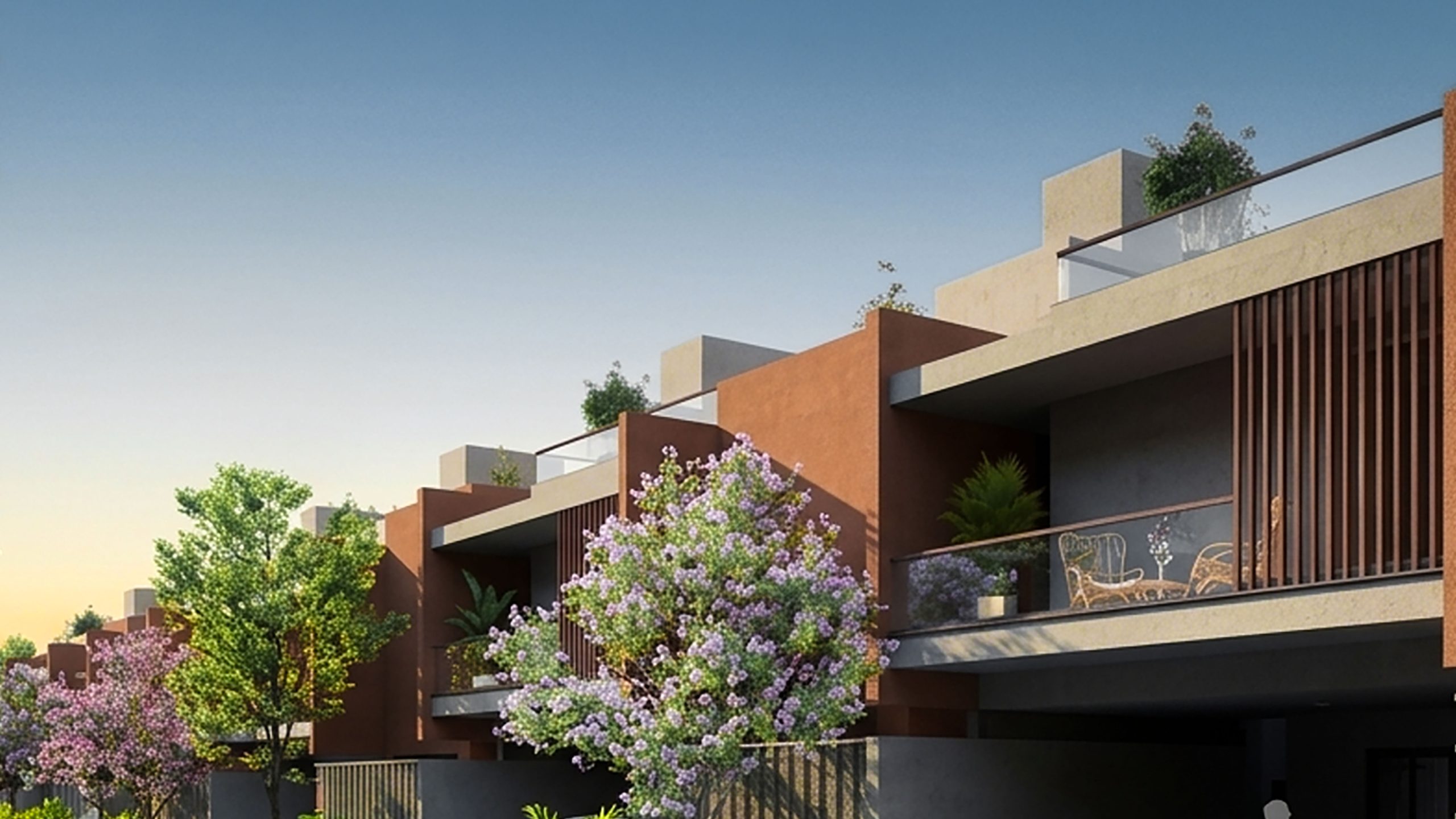
Soulace Villas: Where Space, Privacy and Community Come Together
Featured Property
- September 11, 2026
- 20 min read

Explore Projects


Independent 4 & 5 BHK Villas
starts @ 5 Cr


Sarjapur’s Exclusive 3 BHK Community
starts @ 1.8 Cr

Multi-Gen 2 & 3 BHK Homes
Starts @ 1.87 Cr
Refer & Earn Up to 2%

Invite your friends to explore Modern Spaaces and earn up to 2% of the home value they buy.

Find your Dream Home. Let's talk
Tell us a bit about what you're looking for. One of us will get back to you!