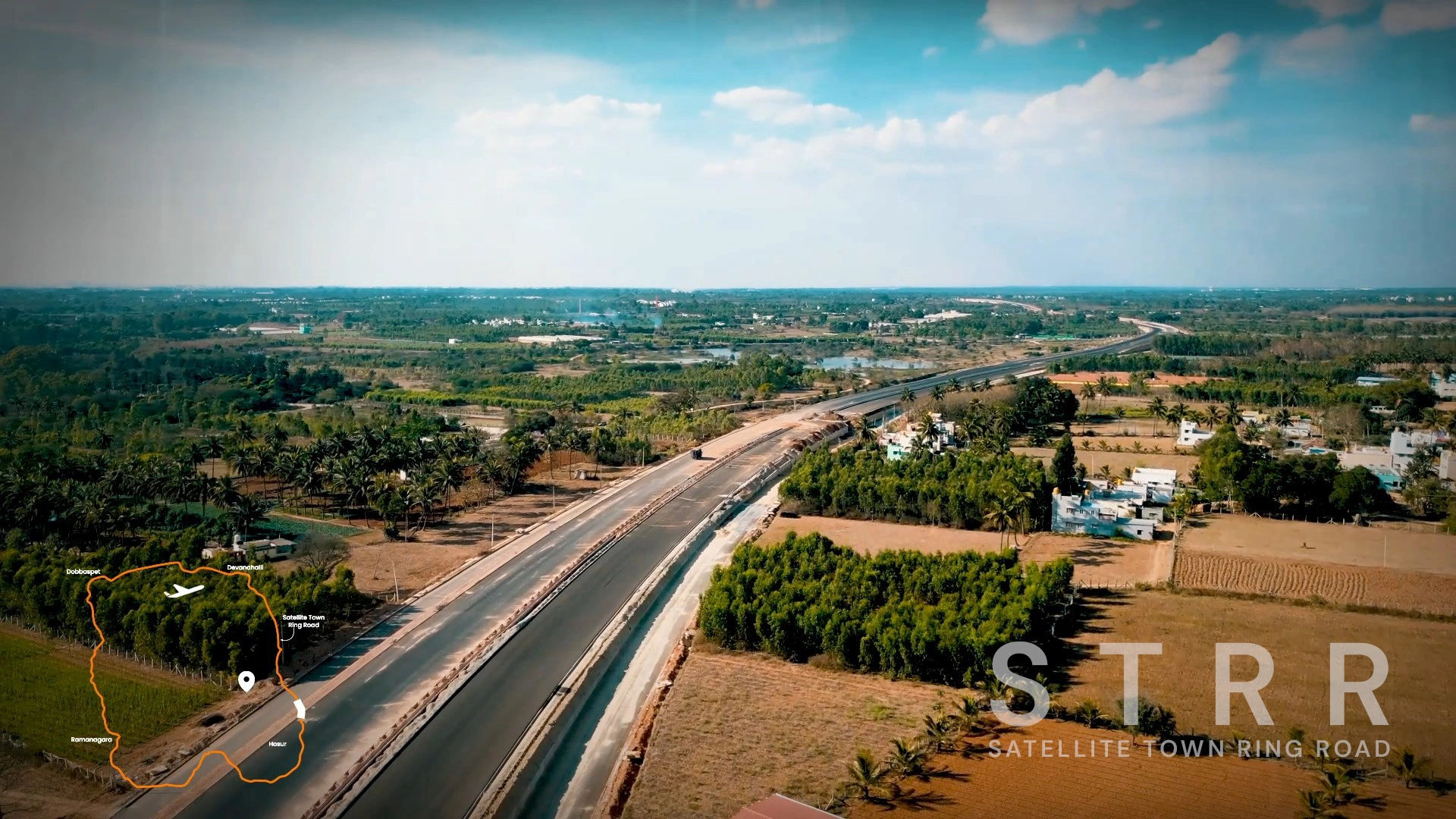
Satellite Town Ring Road (STRR) Bangalore: Route, Benefits, Latest Updates & Real Estate Impact

Buying & Investing Insights
- January 5, 2026
- 8 min read
Introduction
Bangalore isn’t struggling because it’s growing too fast.
It’s struggling because that growth is concentrated in the same few zones.
Every day, bottlenecks like Hebbal, Silk Board, and KR Puram carry more load than they were ever designed for, while vast land parcels just outside the city remain underutilised.
The Satellite Town Ring Road (STRR) is designed to change that.
Not just by reducing traffic but by reshaping how Bangalore expands in the next decade.
What Is the Satellite Town Ring Road (STRR) in Bangalore?
The Bangalore Satellite Town Ring Road (STRR) is a 280 km+ access-controlled ring road encircling Bangalore. It connects key satellite towns such as Sarjapur, Doddaballapur, Hoskote, and Devanahalli, among others. The project links 12 satellite towns and over 330 villages, enabling smoother movement of long-distance and commercial traffic while significantly reducing pressure on the city’s arterial roads. This road is set to become a major urban corridor, driving economic growth and industrial development in the peripheries of Bangalore. The project is expected to be fully completed by 2029.

STRR Bangalore: At a Glance
Key Highlights of STRR Bangalore:
-
- Total Length: 280+ km
- Estimated Cost: ₹17,000 crore
- Configuration: 4 to 6 lanes (access-controlled)
- Design Speed: 100 km/h
- Executing Authority: National Highways Authority of India (NHAI)
- Expected Completion: 2029 (revised timeline)
The STRR connects 8 state highways and 6 national highways, forming a powerful orbital network that integrates road, logistics, and industrial infrastructure around Bangalore.
STRR Bangalore Route Map, Length & Key Details Explained
The STRR route strategically links several high-potential satellite towns around Bangalore:
Key Towns Connected by STRR
- Dobbasapete – Industrial & logistics hub
- Doddaballapur – Textile and education centre
- Devanahalli – Airport zone & aerospace growth corridor
- Hoskote – Warehousing and manufacturing hotspot
- Sarjapur – Fast-growing residential and tech corridor
- Attibele – Industrial belt near Tamil Nadu
- Anekal – Balanced residential and industrial growth
- Kanakapura – Tourism and second-home destination
- Ramanagara – Silk and granite economy
- Magadi – Emerging expansion zone
Over the next decade, these are expected to evolve into self-sustaining urban clusters.
Latest 2026 STRR Update, Completion Status & Real Estate Impact
Union Minister for Road Transport and Highways Nitin Gadkari recently confirmed that the STRR project is in its final phase, with four of the six packages already completed and the remaining two expected to be operational by September and November 2026. In a written reply in the Rajya Sabha, the Minister also stated that proposals for the six-lane expansion from Oblapura to Kunigal and Kunigal to Hosur have been appraised, paving the way for the project’s next phase.
Why STRR Matters Right Now
Infrastructure doesn’t just support growth; it decides where growth happens.
Right now:
- Core Bangalore is reaching saturation
- Commute times are increasing
- Peripheral land is still undervalued
This puts STRR in a high-opportunity phase:
Infrastructure is being built.
But prices haven’t fully caught up yet.
At Modern Spaaces, we built high-value homes in locations that genuinely matter. Our projects near the STRR combine strong present-day connectivity with a strategic position in tomorrow’s growth corridors, offering a smarter alternative to the city’s increasingly congested core.
STRR Bangalore Project Updates
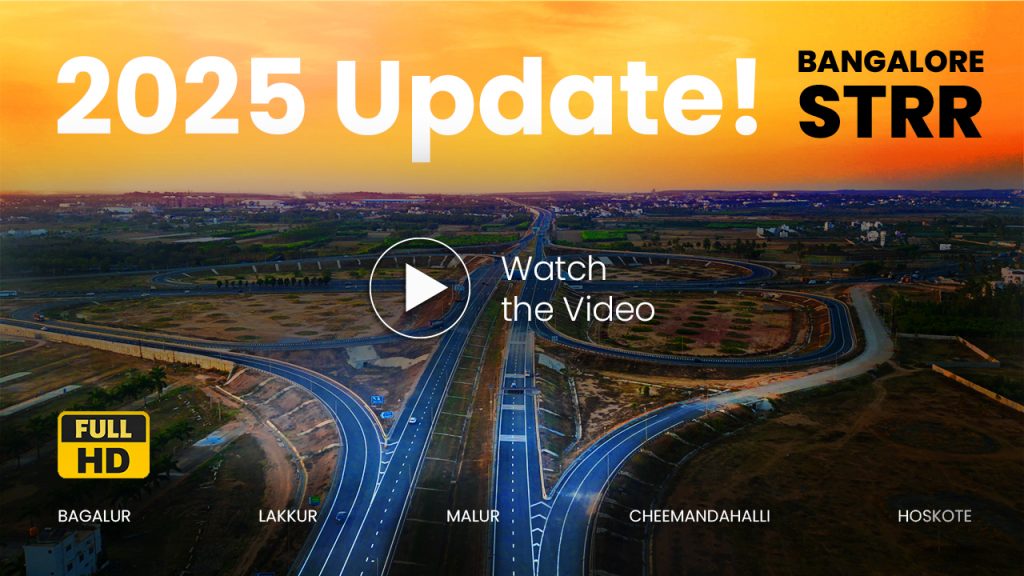
On March 11, 2024, the Prime Minister inaugurated two major STRR stretches totalling nearly 80 km:
- 42 km Dobbasapete–Doddaballapur bypass, built at ₹1,438 crore
- 37.6 km Doddaballapur–Hoskote bypass, built at ₹1,317 crore
Initiated in 2021, these sections were completed with minimal delays. According to official statements, STRR is a critical component of next-generation infrastructure designed to ease Bangalore’s traffic congestion while accelerating socio-economic development in the surrounding regions.
Top Benefits of STRR Bangalore
1. Decongesting Bangalore’s Core
STRR diverts heavy vehicles and long-distance traffic away from inner-city roads, easing pressure on major bottlenecks such as Hebbal, KR Puram, and Goraguntepalya.
2. Better Regional Connectivity
The road enables seamless inter-city and inter-state travel, while improving access to:
- Kempegowda International Airport
- Proposed Hosur Airport
- Multi-Modal Logistics Park at Dobbasapete
- Pune–Bangalore Greenfield Expressway
3. Planned Urban Development
By opening up peripheral regions, STRR promotes balanced urban growth and prevents overburdening of central Bangalore. This encourages the development of well-planned residential communities, commercial hubs, and industrial zones.
4. Tourism and Heritage Growth
STRR connects culturally and historically rich towns, boosting tourism and allied industries such as hospitality, retail, and local businesses.
Will STRR Affect Bannerghatta National Park?
Yes, the STRR alignment passes near Bannerghatta National Park, a sensitive ecological zone.
To minimise impact:
- The road will be elevated in this stretch
- Wildlife movement corridors will be preserved
While this has caused delays due to environmental approvals, it reflects a balanced approach between development and conservation.
STRR Impact on Real Estate in Bangalore
The Satellite Town Ring Road is a game-changer for the real estate industry. Infrastructure-led growth historically drives appreciation, and STRR is no exception.
Areas along the STRR corridor are witnessing:
- Increased demand for residential apartments and plotted developments
- Growth in logistics parks, warehousing, and industrial real estate
- Improved livability due to reduced commute times
Top STRR Investment Hotspots to Watch
- Sarjapur–Chikka Tirupathi – Residential and IT spillover
- Devanahalli – Airport-driven growth
- Hoskote – Logistics & industrial boom
- Doddaballapur – Manufacturing expansion
- Anekal–Attibele – Affordable growth corridor
Why Investing Early Along STRR Matters
The biggest gains in real estate are rarely made after infrastructure is complete.
They’re made while it’s still developing.
Early Investor Advantages:
- Lower entry prices
- Higher appreciation potential
- First access to high-growth corridors
Conclusion
Bangalore isn’t just expanding. It’s redistributing itself. The STRR is a framework for future growth:
- Less congestion
- Better connectivity
- Smarter urban planning
For homebuyers, it offers livability beyond the city chaos. For investors, it represents an early-stage opportunity in emerging markets. In real estate, growth always follows infrastructure. STRR is where that growth is heading next.
Frequently Asked Questions (FAQs)
1. What does STRR Bangalore stand for?
STRR stands for Satellite Town Ring Road, a 280 km (approximately) access-controlled road encircling Bangalore and connecting key satellite towns like Devanahalli, Doddaballapur, Sarjapur, and Hoskote.
2. What is the current status of STRR Bangalore?
Several stretches are operational as of 2024, with full completion expected by 2029.
3. Is STRR different from the Peripheral Ring Road (PRR)?
Yes. PRR is closer to the city, while STRR is an outer ring connecting satellite towns and handling long-distance traffic, logistics, and regional movement.
4. How will STRR affect real estate prices?
STRR is expected to boost real estate values along its corridor due to improved connectivity, infrastructure upgrades, and commercial development.
5. Which areas are best for investment along the STRR?
Sarjapur, Sarjapur-Chikka Tirupathi, Devanahalli, Hoskote, Doddaballapur, and Anekal are among the most promising STRR-linked investment zones.
6. What does STRR approval mean?
STRR approval ensures a real estate project complies with planning, land-use, and infrastructure norms set by the STRR Planning Authority, improving legitimacy and buyer confidence.
7. Will STRR reduce Bangalore traffic congestion?
Yes. By diverting non-city traffic away from central Bangalore, STRR will significantly reduce congestion on major arterial roads.
Read our Latest Blogs
UDS Full Form and Meaning: What Every Bangalore Flat Buyer Should Know

Real Estate Basics
- September 7, 2026
- 17 min read

RERA Terms and Definitions Every Homebuyer in Karnataka Should Know
Regulatory & Legal Guide
- August 28, 2026
- 36 min read
STRR vs PRR Bangalore 2026: Route, Key Differences, Status & Real Estate Impact
Buying & Investing Insights
- August 19, 2026
- 22 min read

Explore Projects
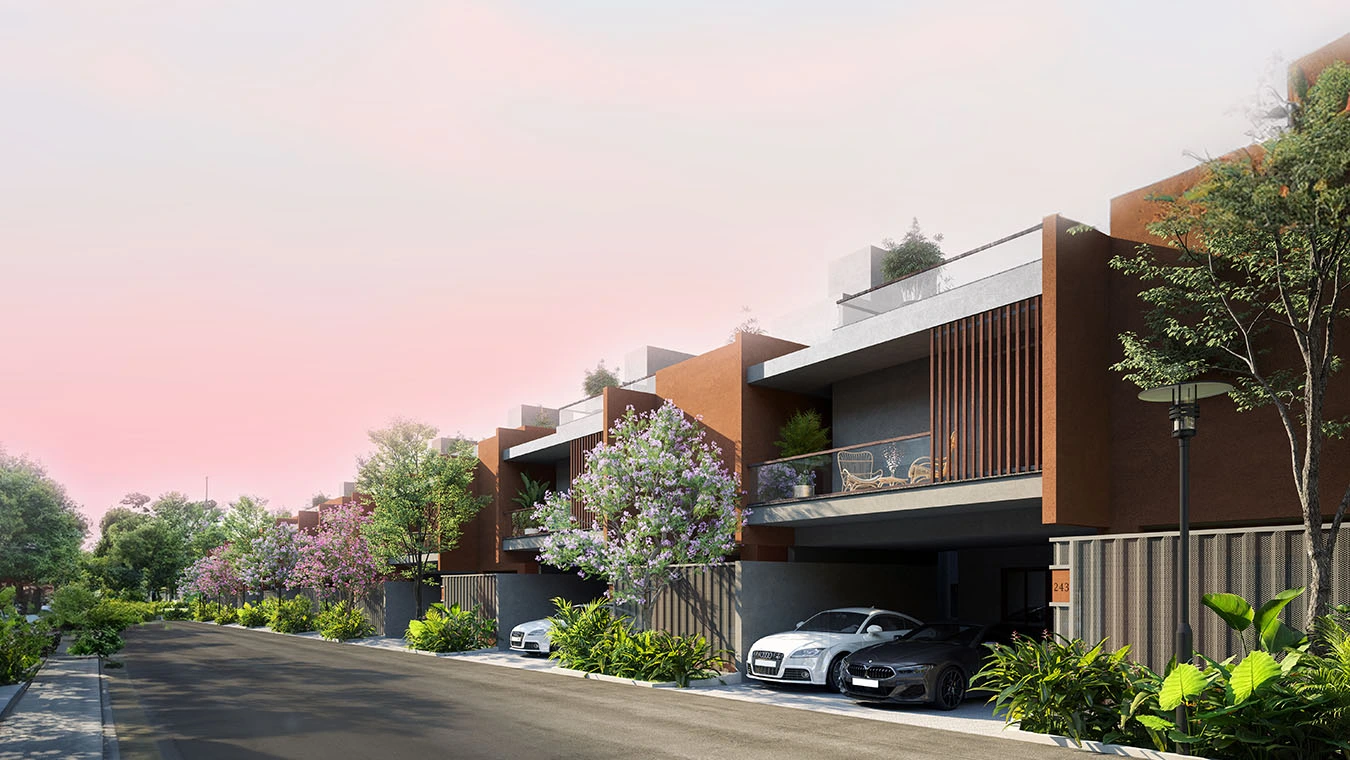

Independent 4 & 5 BHK Villas
starts @ 5 Cr

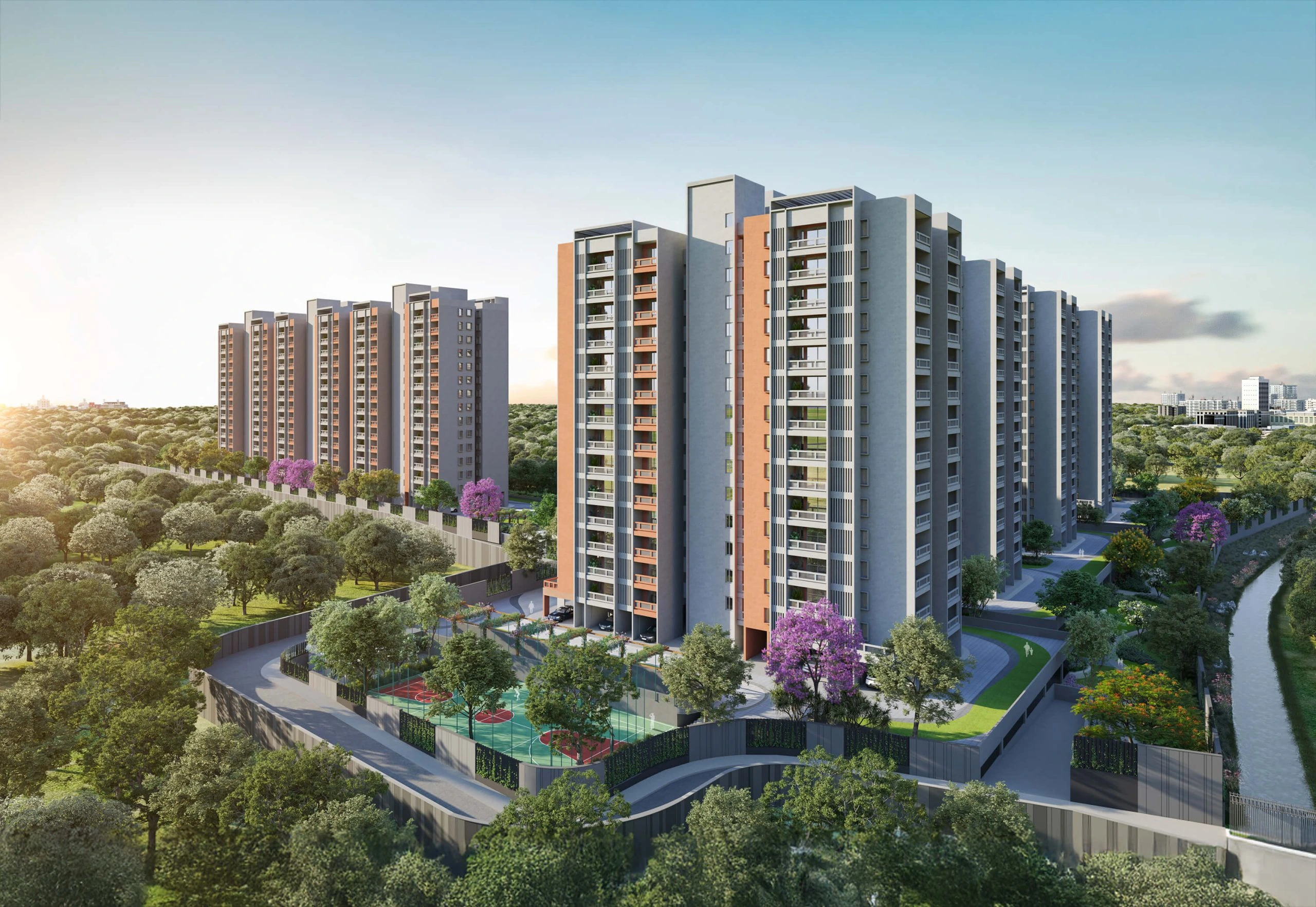

Sarjapur’s Exclusive 3 BHK Community
starts @ 1.8 Cr
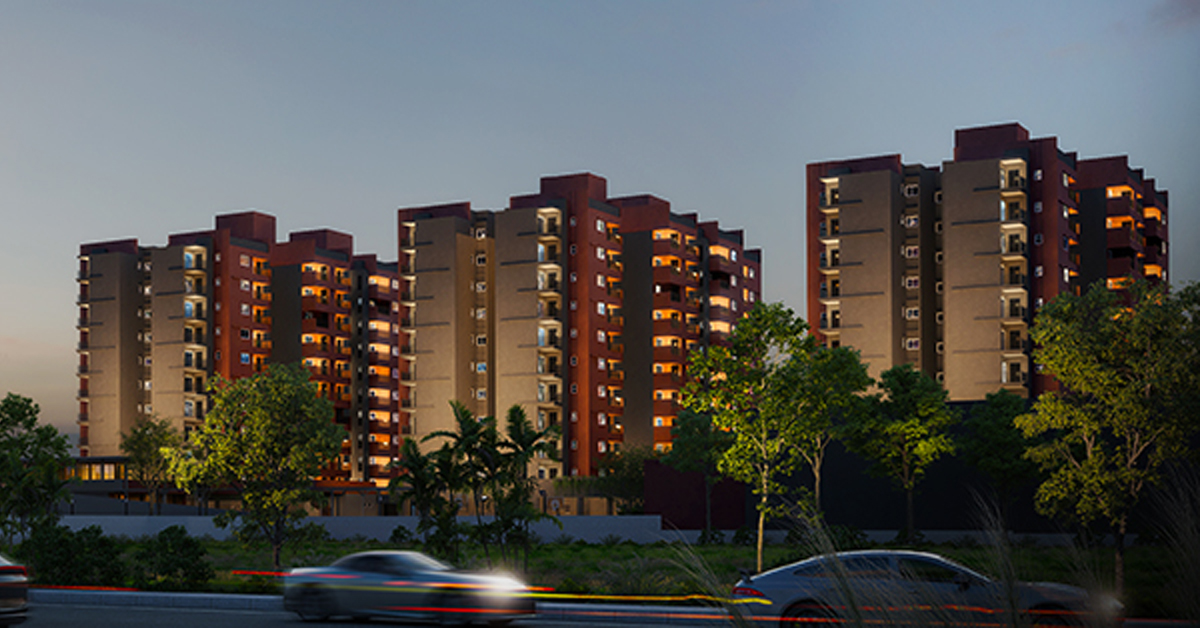

Multi-Gen 2 & 3 BHK Homes
Starts @ 1.87 Cr
Refer & Earn Up to 2%

Invite your friends to explore Modern Spaaces and earn up to 2% of the home value they buy.

Find your Dream Home. Let's talk
Tell us a bit about what you're looking for. One of us will get back to you!